
How Fashion Upcycling Became a Six-Figure Business for Danielle McAllister
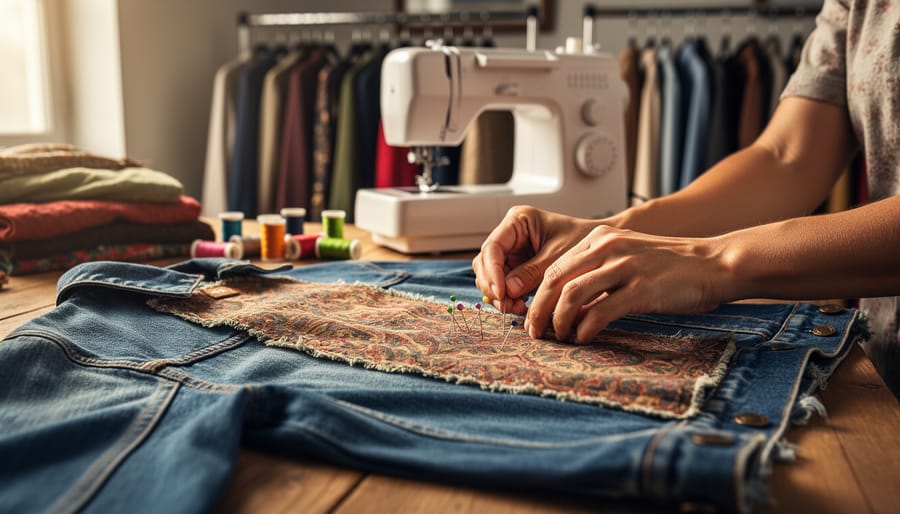
Fashion upcycling transforms discarded clothing and textiles into new, desirable pieces you can sell for profit. It’s a business model that requires creativity, basic sewing skills, and an eye for potential in overlooked materials. What makes it particularly viable in 2026 is the growing consumer demand for sustainable fashion alternatives and the relatively low startup costs compared to traditional fashion businesses.
Danielle McAllister turned this concept into a thriving enterprise, proving that professional women can build financial independence by reimagining what already exists. She started small, sourcing materials from thrift stores and estate sales, then selling redesigned pieces through online marketplaces. Her success wasn’t accidental. It came from understanding her target customer, developing a recognizable aesthetic, and treating upcycling as a legitimate business rather than a hobby.
The appeal of fashion upcycling extends beyond environmental consciousness. It offers creative professionals a pathway to entrepreneurship without massive capital investment or formal fashion training. You’re not competing with fast fashion on volume. You’re offering something genuinely unique that mass production can’t replicate.
This business model works because it solves real problems: waste reduction, affordable access to one-of-a-kind pieces, and the desire for fashion that tells a story. The key is approaching it strategically. Understanding pricing, building a consistent brand, and mastering the logistics of sourcing and selling will determine whether your upcycling passion becomes a sustainable income stream or remains a weekend project.
What Fashion Upcycling Really Means (And Why It Matters Now)
Fashion upcycling transforms discarded or outdated garments into entirely new pieces with greater value than the original. Unlike recycling, which breaks clothing down to raw fibers, or reselling, which passes items along unchanged, upcycling reimagines and reconstructs. You’re creating something fresh from something forgotten.
- Upcycling
- Transforming old garments into new designs with added value, such as turning vintage jeans into a patchwork jacket or converting men’s dress shirts into a structured dress.
- Recycling
- Breaking down textile materials to their basic fibers for reprocessing into new fabric, typically through industrial processes that yield lower-quality materials.
- Reselling
- Selling secondhand clothing as-is through thrift stores, consignment shops, or online platforms without modification or creative transformation.
- Refashioning
- Making alterations to existing garments, hemming, taking in seams, or minor style updates, without fundamentally changing the piece into something new.
The timing couldn’t be better for women entering this space. The sustainable fashion market growth shows consumers actively seeking alternatives to fast fashion’s environmental toll. In 2026, shoppers increasingly want transparency about where their clothes come from and who makes them. They’re willing to invest more in pieces with stories, craftsmanship, and values that align with their own.
This shift creates genuine opportunity. Women entrepreneurs bring natural advantages to fashion upcycling, creative vision, attention to detail, and understanding of what other women want from their wardrobes. You don’t need massive capital or factory connections to start. What you need is imagination, basic skills, and the confidence to offer something different in a market hungry for authenticity and sustainability.
Danielle McAllister’s Journey: From Corporate Job to Creative Freedom
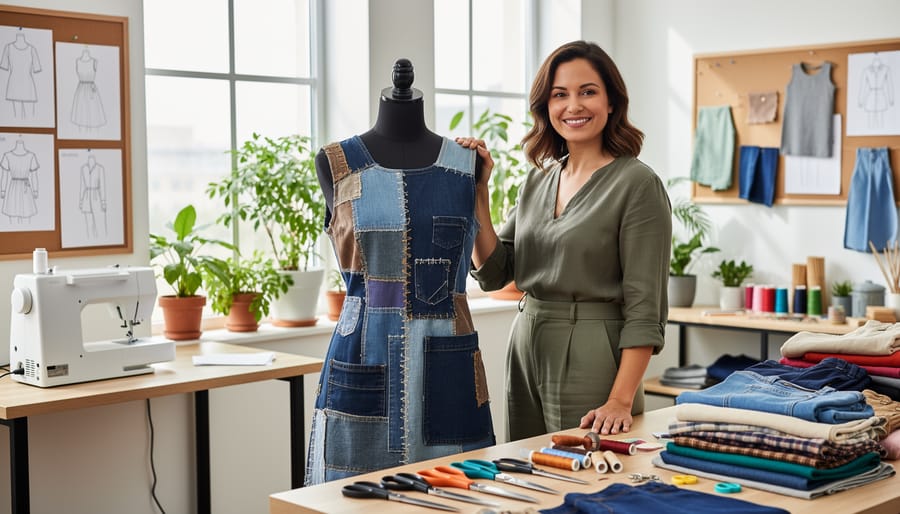
Danielle McAllister spent eight years climbing the corporate ladder at a mid-sized marketing firm in Portland, Oregon. By all conventional measures, she’d made it, steady paycheck, benefits, a 401(k). But something felt fundamentally wrong. She found herself scrolling through sustainable fashion accounts during lunch breaks, sketching redesigns on meeting agendas, and feeling increasingly disconnected from work that no longer aligned with who she was becoming.
The shift didn’t happen overnight. Danielle started small, transforming thrift store finds in her apartment after work. A blazer became a structured vest. Outdated denim turned into patchwork bags she gave as gifts. Friends noticed. Then friends of friends started asking if she’d take commissions. What began as creative therapy was generating unexpected income, $200 one month, then $500, eventually consistent four-figure months.
Her breakthrough moment came when a local boutique owner discovered her work on Instagram and ordered fifteen pieces for a pop-up shop. They sold out in three days. Danielle realized she wasn’t just making things people liked; she was building something people would pay for.
The transition required serious strategy. Danielle didn’t quit her job immediately. Instead, she negotiated reduced hours at work, dropping to four days a week. The 20% pay cut felt manageable because her upcycling income was already covering the difference. This hybrid approach gave her financial cushion while testing whether the business could sustain her long-term.
She faced real challenges. Sourcing quality materials took longer than expected. Her first pricing attempts barely covered costs, let alone her time. Production slowed dramatically when she tried to scale too quickly, leading to burnout that nearly derailed everything.
What saved her was treating the business seriously from the start. Danielle tracked every expense, learned basic bookkeeping, and set boundaries around her creative time. She joined a local women’s business co-op that provided accountability and practical advice from entrepreneurs further along similar paths.
Eighteen months after that first boutique order, Danielle left corporate work entirely. Her fashion upcycling business generated $140,000 in its second full year, proof that creative freedom and financial stability don’t have to be mutually exclusive.
The Business Model Behind Fashion Upcycling Success
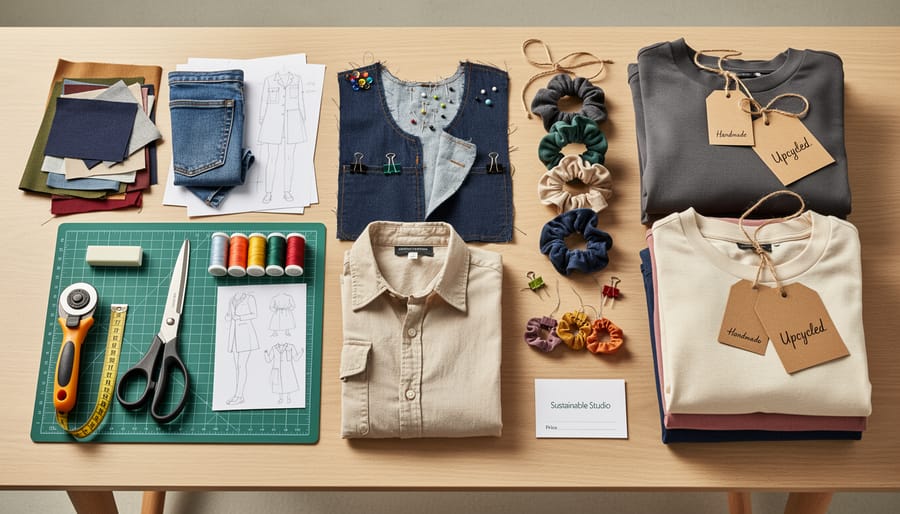
Where to Source Materials Without Breaking Your Budget
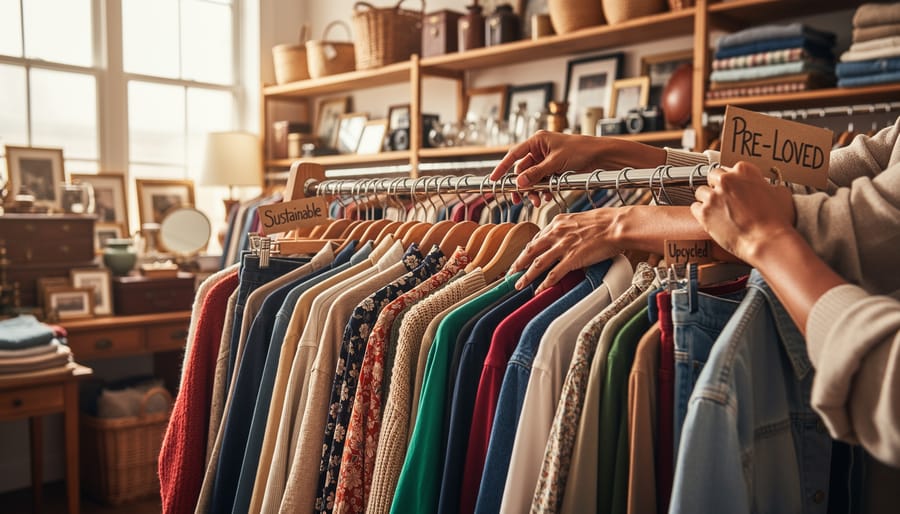
Sourcing quality materials cheaply separates profitable upcycling from an expensive hobby. Danielle built her entire first collection spending under $200 on materials, here’s how she did it.
Start with thrift stores during their half-price days, typically mid-week. Look for natural fibers like cotton, linen, and wool, which hold up better through redesign. A $3 vintage dress can yield enough fabric for three items. Estate sales, especially on final days when sellers want to clear inventory, often price clothing by the bag rather than piece.
Textile waste programs connect businesses with upcyclers. Contact local bridal shops, tailors, and dry cleaners about purchasing fabric scraps or damaged items. Many pay disposal fees for textile waste and welcome alternatives.
Quality assessment matters more than initial appearance. Check for stains you can work around, strong seams indicating durability, and fabric weight suitable for your designs. Skip items with extensive moth damage or weakened fibers that tear easily.
Building relationships with consistent sources creates steady inventory without constant hunting. Danielle now gets first pick at two consignment shops before items hit the floor, simply because she buys regularly and pays promptly.
Pricing Your Pieces for Profit and Sustainability
Start with your actual costs: fabric scraps, embellishments, thread, and overhead like studio space or shipping supplies. Then calculate your time honestly. If you spend four hours transforming a jacket, and you’re aiming for $30 per hour (a reasonable skilled labor rate), that’s $120 in labor alone. Add your material costs, then multiply by 1.5 to 2 for wholesale, or 2.5 to 3 for direct-to-consumer pricing that allows for marketing costs and profit margin.
The biggest trap? Pricing like you’re at a garage sale instead of selling original design work. Your upcycled pieces aren’t used clothing, they’re reconstructed fashion with creative vision behind them. A blazer you’ve deconstructed and rebuilt with vintage silk panels isn’t comparable to a thrift store find. Research what similar one-of-a-kind pieces sell for on platforms like Etsy or at local boutiques carrying handmade goods.
Build in room for growth. If you price too low initially, raising prices later feels difficult even as your skills improve and demand increases. Start at a sustainable rate that reflects real value, and let your work prove it’s worth it.
Skills You Need (And How to Develop Them Fast)
Starting a fashion upcycling business doesn’t require a fashion degree or years of apprenticeship. You need a combination of creative and practical skills, most of which you can develop in weeks rather than years.
The foundational skill is basic sewing, hand stitching, operating a standard sewing machine, and understanding simple alterations. You don’t need couture-level technique to transform a vintage dress or reimagine a denim jacket. Free YouTube tutorials from channels like Withwendy and Professor Pincushion can teach you essentials in a weekend. Practice on scraps from thrift stores before touching pieces you plan to sell. Within a month of consistent practice, you’ll have enough competence to create marketable pieces.
Design thinking comes next, which means training your eye to see potential in overlooked garments. This isn’t innate talent; it’s pattern recognition you develop by studying successful upcyclers on Instagram and Pinterest, visiting thrift stores regularly to assess what’s available, and sketching transformation ideas before cutting fabric. Dedicate two hours weekly to this visual research and your design instincts will sharpen quickly.
Photography matters because upcycled fashion sells visually. Learn to shoot in natural light, style flat lays, and edit with free apps like Snapseed. A smartphone camera is sufficient. Allocate one afternoon to watch photography tutorials specific to clothing, then practice by photographing your own wardrobe.
Marketing and business management are skills you build while doing. Start with a simple Instagram account to share your work and connect with potential customers. Use free tools like Canva for graphics and Wave for basic bookkeeping. Read one practical business book relevant to creative entrepreneurs, Danielle recommends starting with resources from Creative Live or Skillshare rather than dense MBA textbooks.
The timeline is surprisingly short. Three months of focused weekend work gives you enough competency across all areas to launch a test collection and start generating revenue while continuing to improve.
Building Your Brand in the Sustainable Fashion Space
Your brand is what makes someone choose your upcycled piece over a vintage find or a mass-market sustainable line. In a space where everyone can claim eco-credentials, your distinct voice and visual identity become your competitive edge.
Start by defining your niche within upcycling. Danielle focused on transforming men’s dress shirts into women’s workwear, a specific angle that immediately differentiated her from general upcyclers. You might specialize in denim reconstruction, wedding dress transformations, or children’s clothing from adult pieces. Narrowing your focus makes your marketing sharper and helps customers understand exactly what you offer.
Your brand story should answer why you upcycle, not just how. Share your personal connection to sustainable fashion, whether it’s a reaction to fast fashion waste, a love of creative problem-solving, or a desire to make quality clothing accessible. Authenticity resonates more than perfection. People buy from upcyclers partly because they’re supporting a person with values, not just purchasing a product.
Social media becomes your primary showroom, but the platforms matter. Instagram and TikTok work best for visual transformation content, those satisfying before-and-after posts that showcase your creative vision. Document your process, explain your material choices, and show pieces in real-life settings. Video content showing transformations in progress consistently outperforms static photos because it demonstrates skill and builds anticipation.
Apply business intelligence to your social presence by tracking which posts drive actual inquiries and sales, not just likes. Adjust your content based on what converts browsers into buyers.
Build community rather than just an audience. Engage with sustainable fashion advocates, respond genuinely to comments, and collaborate with complementary creators. Host small workshops or share techniques openly, this generosity establishes you as an expert and attracts customers who value your approach. Your community becomes both your support network and your most effective marketing channel.
Overcoming the Challenges Every Fashion Upcycler Faces
Every fashion upcycling business hits the same rough patches, figuring out how much time you actually have, keeping ideas fresh when you’re on deadline number twelve, and wondering where your next batch of materials will come from. Danielle learned early that success wasn’t about avoiding these problems; it was about building systems to handle them before they derailed her week.
Time evaporates faster than you expect when you’re sourcing, designing, photographing, and shipping. Danielle blocks her calendar in four-hour chunks dedicated to single tasks. Tuesdays are for sourcing and sorting. Thursdays are creation days with her phone off. This prevents the constant switching that kills both productivity and creativity. She also stopped trying to do everything perfectly, good enough ships, and shipping builds the business.
Pros
- Creative control over every aspect of your work and brand identity.
- Lower startup costs compared to traditional fashion businesses requiring inventory.
- Direct connection with customers who value sustainability and craftsmanship.
- Flexible schedule that adapts to your life and other commitments.
Cons
- Income fluctuates month to month, especially in the first year.
- Sourcing quality materials requires constant effort and unpredictable availability.
- Scaling is limited by your personal production capacity unless you hire help.
- Marketing demands significant time on top of actual creation work.
The inconsistent inventory problem requires a different market strategy. Danielle maintains relationships with three thrift stores that text her when new stock arrives. She also educates her audience about one-of-a-kind pieces rather than fighting the scarcity. Her customers now see limited availability as exclusivity, not a flaw.
Creativity under pressure fades if you treat every piece like a masterpiece. Danielle developed five core techniques she can execute confidently, then experiments only when inspiration genuinely strikes. This consistency gives customers recognizable style while keeping production manageable. She also photographs works-in-progress for social content, turning the creative process itself into marketing material that requires zero extra effort.
Your First Steps Toward a Fashion Upcycling Business
Start with three pieces. Pick garments you already own that you’d transform anyway, not expensive thrift finds. A pair of jeans into a tote bag. An oversized blazer cut down to fit. A dated dress with new buttons and a hemline shift. Document the process with your phone camera, before, during, after.
Wear or gift these first pieces, then watch for reactions. When someone asks where you got it, that’s your market signal. If nobody notices or cares, adjust your approach before investing more time or money.
While still employed, test demand without the pressure of needing income. List one piece on a platform you already use, Instagram, Facebook Marketplace, or a local consignment shop. Set a price that reflects your hours and materials plus a modest profit margin. If it sells within two weeks, make two more. If it sits for a month, reconsider your design or audience.
Track everything in a simple spreadsheet: hours spent, materials cost, selling price, where it sold. You’re using data to learn what works, not guessing. This low-stakes testing reveals whether your style resonates and your pricing makes sense before you quit anything.
Build slowly. When you have five sales, consider ten pieces. When you have consistent weekend work, evaluate whether part-time hours at your job might free up creative time without financial risk. Growth happens through repetition and refinement, not overnight transformation.
The goal isn’t to replace your income immediately. It’s to prove the concept, develop your skills, and establish a foundation that could scale when you’re ready. Start where you are, with what you have, and let the work show you the next step.
Danielle McAllister’s journey from corporate employee to six-figure fashion upcycling entrepreneur isn’t just an inspiring story, it’s a blueprint for what’s possible when creativity meets business strategy. She proved that sustainable fashion can deliver both personal fulfillment and financial independence, transforming discarded materials into a thriving business that now supports her lifestyle and values.
The beauty of fashion upcycling lies in its accessibility. You don’t need a fashion degree, significant startup capital, or industry connections to begin. What you need is the willingness to start small, learn as you go, and trust that your unique perspective has value in a market hungry for authentic, sustainable alternatives.
Whether you’re testing the waters with a few weekend projects or ready to transition away from traditional employment, the opportunity exists. The sustainable fashion movement isn’t slowing down, consumer demand continues growing, and women entrepreneurs are uniquely positioned to lead this shift. Your skills, whether you’re developing them now or building on existing talents, can translate into a viable business with the right approach to pricing, marketing, and scaling systems.
The question isn’t whether fashion upcycling can work as a business, Danielle already answered that. The real question is whether you’re ready to explore what this path could mean for your own financial future and creative expression.



Leave a Reply