
How to Build a Ceremonial Matcha Morning Ritual That Sharpens Your Work Focus
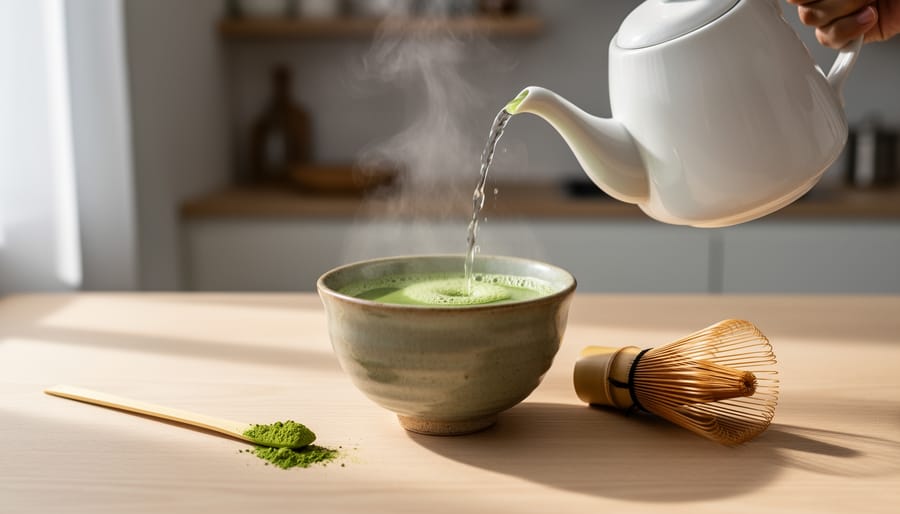
A ceremonial matcha morning ritual takes five to ten minutes and transforms how you approach your workday by combining mindful preparation with sustained mental clarity. The practice centers on whisking ceremonial grade matcha using traditional Japanese tools, creating a quiet moment before the demands of your inbox and calendar begin. Unlike coffee’s quick spike and crash, matcha delivers L-theanine alongside caffeine, producing calm alertness that carries you through complex meetings and deep work without the jitters.
Professional women who’ve adopted this ritual report sharper decision-making and better emotional regulation during high-pressure moments. Sarah Chen, a financial analyst in Toronto, credits her morning matcha practice with helping her stay composed during quarterly earnings calls. She started in early 2025 and noticed within two weeks that her afternoon energy no longer collapsed at 2 p.m.
The ritual itself matters as much as the tea. Those deliberate motions of heating water, sifting powder, and whisking in measured circles create a boundary between personal time and professional demands. You’re training your brain to shift into focus mode through repetition and sensory cues: the earthy aroma, the vibrant green against white ceramic, the gentle sound of bamboo against the bowl.
This isn’t about adding complexity to your morning. You’re replacing scattered scrolling or rushed coffee with an intentional practice that compounds over time. The physical act of preparation becomes a signal to your nervous system that you’re transitioning into a state of productive attention. What begins as a beverage choice evolves into a competitive advantage, one quiet morning at a time.
Why Ceremonial Matcha Works for Morning Focus
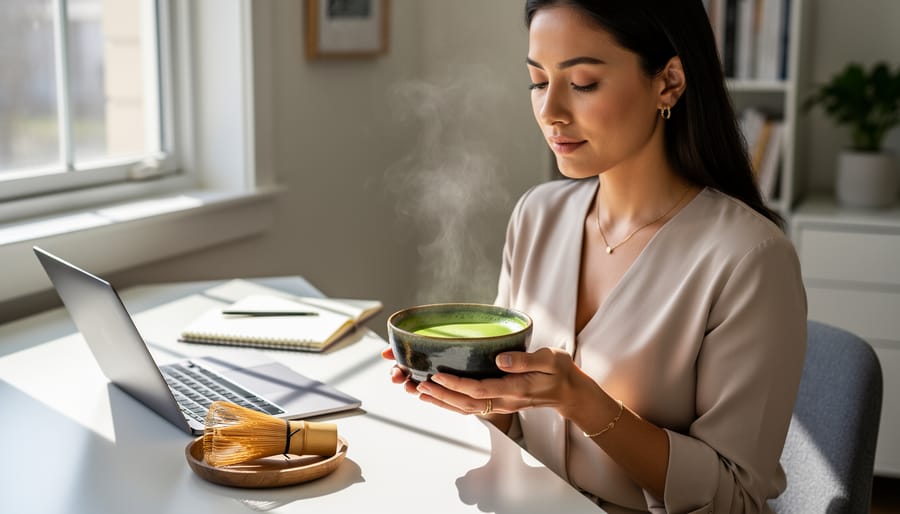
Ceremonial matcha delivers a unique biochemical advantage for work focus that regular coffee simply can’t match. The combination of L-theanine and caffeine creates what researchers call “calm alertness”, you get the mental clarity and energy boost without the jitters or mid-morning crash. L-theanine, an amino acid abundant in high-grade matcha, promotes alpha brain wave activity, the same state associated with deep focus and creative problem-solving. When paired with matcha’s moderate caffeine content (about 70mg per serving), this compound produces sustained concentration that can last four to six hours.
The quality difference between ceremonial and culinary grade matcha is substantial and directly impacts your focus results. Ceremonial grade uses the youngest, most tender tea leaves, shade-grown to boost chlorophyll and amino acid content. This produces a sweeter, smoother flavor with higher L-theanine levels, the compound doing the heavy lifting for your concentration. Culinary grade, harvested later and often bitter, lacks this nutritional density and can actually feel harsh on an empty stomach, defeating the purpose of a calming morning ritual.
Beyond the chemistry, the ritual itself rewires your morning mindset. Starting your day with a deliberate, screen-free practice signals to your brain that you’re in control of your time and energy. This psychological shift translates into measurable productivity gains. Research on morning routines shows that intentional rituals reduce decision fatigue and increase task completion rates throughout the day.
Sarah, a marketing director in Chicago, discovered this firsthand after replacing her rushed coffee habit with a ten-minute matcha ritual. Within three weeks, she noticed she was tackling her most challenging projects before noon instead of procrastinating until afternoon. The difference wasn’t just the matcha itself, it was claiming those morning minutes to set her intention and transition into work mode with clarity rather than chaos.
What You’ll Need for Your Matcha Morning Ritual
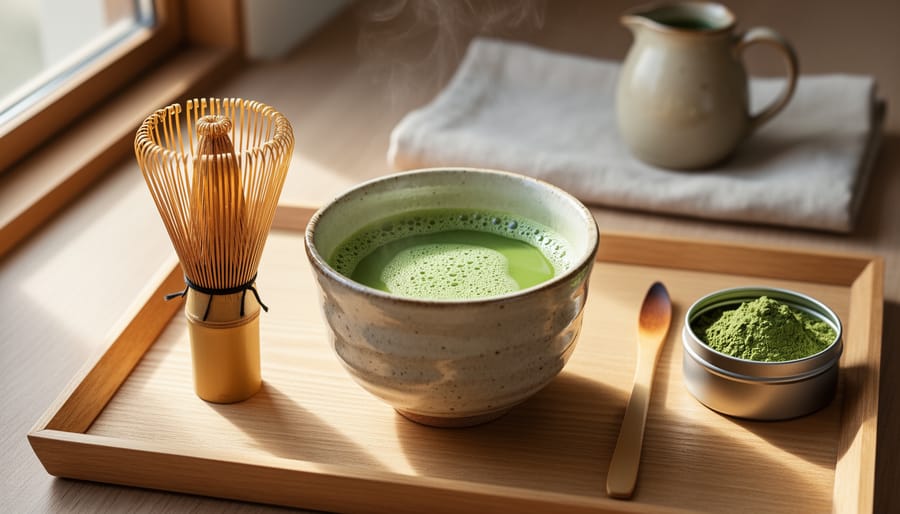
Setting up your ceremonial matcha morning ritual requires just a few specialized tools, and the good news is you don’t need to spend a fortune to start. The traditional Japanese preparation method relies on simple equipment that has remained largely unchanged for centuries because it works. While you can find elaborate setups, a basic kit costing $40-60 will serve you perfectly well as you build this practice into your professional routine.
Here’s what you need to gather before your first ceremony:
- Ceremonial grade matcha powderthe foundation of your ritual; look for vibrant green color and origin labels indicating first harvest from Japan
- Bamboo whisk or chasencreates the signature froth and smooth consistency; aim for 80-100 prongs for best results
- Matcha bowl or chawanwide, shallow bowl that allows proper whisking motion; ceramic works well and doesn’t need to be expensive
- Bamboo scoop or chashakumeasures the precise amount of powder; one scoop equals roughly half a gram
- Small fine-mesh siftereliminates clumps for silky texture; a regular tea strainer works if needed
- Kettle with temperature control or thermometerensures water reaches 175°F without boiling away the delicate compounds
The most important investment is your matcha powder itself. Ceremonial grade runs $25-45 for a 30-gram tin in 2026, which provides about 15-30 servings depending on how strong you prefer it. Look for brands that specify the region in Japan where it’s grown (Uji and Nishio are renowned areas), and check that the powder is stone-ground and intended for drinking straight, not cooking. The color should be bright, almost neon green rather than dull or yellowish, which signals freshness and quality.
You can source authentic tools from specialty tea retailers, Japanese import shops, or reputable online vendors that focus specifically on matcha rather than general kitchenware. Many companies now offer beginner sets bundled at a discount. If budget is tight initially, prioritize quality matcha and the bamboo whisk. You can temporarily substitute a regular ceramic bowl and a measuring spoon, but the whisk makes a genuine difference in creating the proper consistency that supports the meditative preparation process. As you deepen your practice, you’ll naturally want to upgrade your tools, but perfectionism shouldn’t delay you from starting tomorrow morning.
Important Considerations Before You Start
Before you begin this practice, there are several factors that will determine whether ceremonial matcha serves your focus goals or works against them.
Timing matters significantly for professional performance. Morning is ideal because the L-theanine and caffeine combination takes 20-30 minutes to reach peak effectiveness, aligning perfectly with the start of deep work. Drinking matcha after 2 PM may interfere with sleep quality, undermining the very focus you’re trying to build. If you’re currently a heavy coffee drinker, don’t add matcha on top, replace one habit with the other to avoid excessive caffeine intake.
Your stomach’s response deserves attention too. Some women experience mild nausea when drinking matcha on an empty stomach, particularly in the first week. If this happens, eat a small piece of fruit or a handful of nuts fifteen minutes before your ritual. This isn’t a failure of the practice; it’s your body asking for adjustment.
The hot water for ceremonial preparation should reach 175°F, not boiling. Water that’s too hot scorches the delicate matcha powder, creating bitterness and destroying beneficial compounds. If you don’t have a thermometer, let boiled water cool for three minutes before using it.
Finally, set realistic expectations. Ceremonial matcha has a rich, slightly vegetal taste that may seem unfamiliar at first, your palate will adapt within five to seven sessions. The whisking technique takes practice too; your first attempts might produce a thin, watery consistency rather than the signature froth. Consider pairing your early sessions with a quick meditation guide to stay grounded in the learning process rather than chasing perfection. This ritual rewards consistency, not immediate mastery.
Step-by-Step: Creating Your Ceremonial Matcha Morning Ritual
Step 1: Set Your Intention and Space
Before you touch the matcha powder or heat the water, create a boundary between sleep mode and work mode. Clear your desk or kitchen counter, move the mail pile, close the laptop, wipe down the surface. This physical act signals to your brain that something different is happening.
Stand or sit at your clean space and take three deliberate breaths. Inhale for four counts, exhale for six. Let your shoulders drop.
Now choose one specific intention for your workday. Not “be productive”, too vague. Try “finish the client proposal by noon” or “stay present in the 10am meeting.” Speak it aloud or write it down.
This isn’t superstition. Research shows that setting a concrete intention before a ritual primes your brain’s reticular activating system to notice relevant opportunities and filter out distractions. You’re essentially programming your focus before the matcha even enhances it chemically. Professional athletes do this before competition. You’re doing it before work.
Step 2: Prepare Your Water and Tools
Heat water to 175°F, just below boiling, using a thermometer or letting boiled water cool for two minutes. While it cools, pour a small amount of hot water into your matcha bowl to warm it, then discard. Gather your bamboo whisk, scoop, and sifted matcha powder within arm’s reach.
This preparation phase isn’t busywork. It’s a deliberate transition from sleep mode to professional readiness. The simple act of arranging your tools activates focus before you’ve consumed anything. You’re training your brain to recognize these movements as the start of concentrated work time. Each morning you repeat this sequence, the neural pathway strengthens. Your mind learns: hot water warming the bowl means it’s time to think clearly and tackle priorities. By the time you whisk, you’re already mentally present.
Step 3: Sift and Measure the Matcha
Sift 1-2 scoops (about 1-2 grams) of ceremonial matcha powder through a fine-mesh sifter directly into your warmed bowl. This step breaks up clumps that form from moisture exposure and creates an airy, lump-free powder.
Skipping this ruins your ritual. Unsifted matcha produces a grainy, uneven texture that resists whisking, you’ll end up with bitter clumps floating in your bowl instead of smooth, vibrant foam. When you’re investing in ceremonial grade matcha and precious morning minutes, sifting ensures you actually experience the delicate flavor and creamy consistency that support focus rather than fighting with your tools.
The gentle pressing motion through the sifter also slows you down, reinforcing the mindful pace that separates this ritual from grabbing instant coffee.
Step 4: Add Water and Whisk
Pour 2 to 3 ounces of your prepared water into the bowl over the sifted matcha. The water should be around 175°F, hot enough to release the tea’s flavor but not so hot that it turns bitter. This precise temperature matters because ceremonial grade matcha contains delicate compounds that support focus, and boiling water destroys them.
Pick up your bamboo whisk and hold it loosely between your fingers. Whisk rapidly in a W or M motion across the surface of the liquid, not in circles. Your wrist should move quickly while your arm stays relatively still. Keep whisking vigorously for 15 to 30 seconds until you see a layer of fine, uniform foam develop on top.
Proper consistency looks like microfoam, smooth and velvety, not large bubbles. The color should be vibrant jade green. If you see clumps floating or settling at the bottom, you whisked too gently or skipped the sifting step. If the foam is bubbly rather than creamy, you moved too slowly. This whisking action isn’t just about texture; the aeration releases aromatic compounds that signal your brain it’s time to focus.
Step 5: Pause, Observe, and Sip Mindfully
This is the moment where ritual becomes fuel. Before you lift the bowl, take five seconds to observe the bright jade color and inhale the grassy, slightly sweet aroma. Notice the foam pattern your whisking created. This brief pause triggers a parasympathetic response that prepares your mind for focused work.
Sip slowly, holding each mouthful for a beat before swallowing. No phone. No email preview. Just you and the matcha for these five to ten minutes. The vegetal, umami flavor might seem unfamiliar at first, but that’s part of the mindfulness exercise.
Unlike gulping coffee while scanning messages, this deliberate consumption allows L-theanine to begin modulating caffeine absorption before you even finish drinking. Your nervous system registers calm before alertness kicks in. Professional women who maintain this mindful sipping report entering their first work task with clarity rather than frantic energy, setting a different tone for decision-making and problem-solving throughout the morning.
Step 6: Transition Into Your Workday
The ritual doesn’t end when you finish drinking. Rinse your bowl and whisk immediately, this simple act signals mental closure and prevents matcha residue from staining. As you clean, you’re creating a bridge between stillness and productivity.
Before opening your laptop, write down one non-negotiable priority for the day. Just one. This anchors your focus when distractions hit later. If you prefer reviewing your existing task list, do it now while your mind is clear but before the workday chaos begins.
Then transition into work. The matcha takes 20-30 minutes to reach peak effectiveness, so start with something that doesn’t require intense concentration, clearing your inbox, organizing files, or planning your first deep work block. You’ll notice the calm alertness building as you settle into your tasks, without the jittery rush coffee often brings.

How to Know Your Ritual Is Working
Your matcha ritual is working when you notice clear shifts in how your mornings feel and how your first work hours unfold. The signs aren’t always dramatic, but they’re measurable if you pay attention.
Watch for these indicators that your practice is sharpening your focus:
- You reach 11 a.m. without needing a second caffeine hit or feeling energy dip
- You complete deep work tasks in the first two hours that used to take all morning
- You feel alert but not jittery, calm but not drowsy, that distinctive L-theanine state
- Morning anxiety or task overwhelm decreases as you start the day with intention
- You’re less reactive to email chaos and more deliberate about priorities
Track your patterns for two weeks. Note your focus quality from 8 to 11 a.m., when you hit concentration slumps, and how many tasks you finish before lunch. Compare this baseline to your pre-ritual performance. If you’re seeing improvements, you’ve found your rhythm.
If results feel inconsistent, adjust the variables. Try matcha 15 minutes earlier or later. Reduce to one gram if you feel overstimulated. Extend the mindful sipping time if you’re rushing through it and diving into work too quickly. The ritual works best when it creates a buffer between sleep and the demands of your inbox, helping you defeat draining environments before they derail your morning momentum.
Once the practice feels natural, layer in complementary habits. Pair matcha mornings with music during work sessions or use the ritual as a foundation for building a calming workplace environment. Consistency matters more than perfection, five intentional matcha mornings beat sporadic attempts at elaborate routines.
Common Questions About Ceremonial Matcha Morning Rituals
How long does the ritual take?
The complete ritual takes 10-15 minutes from setup to finishing your matcha. If you’re short on time, you can streamline it to 5-7 minutes once you’ve practiced the technique.
Can I add sweetener or milk to ceremonial matcha?
Traditional preparation is water-only to appreciate the natural umami sweetness, but if you’re adapting, a tiny drizzle of honey won’t ruin the experience. Adding milk transforms it into a latte and changes the intended flavor profile and ritual nature.
What if I don’t have all the traditional tools?
A small whisk or milk frother can substitute for a bamboo whisk, and any small bowl works instead of a chawan. The tools enhance the experience, but the mindfulness and quality matcha matter more than perfection.
Can I do this if I’m not a morning person?
Absolutely. The ritual itself can help shift you into a more focused state, which is partly why it works. Start with just the preparation steps and let the L-theanine do its work over 20 minutes.
The price of quality ceremonial matcha ranges from $25 to $60 for a 30-gram tin in 2026, which yields about 15-30 servings depending on how much you use. That works out to roughly $1-3 per morning ritual, comparable to a daily coffee shop habit but with the added benefit of a structured focus practice. If budget is tight, start with a smaller quantity to test whether the ritual fits your routine before investing in premium grades or a full tool set.
This practice differs from grabbing a matcha latte at a café because you’re actively participating in each step rather than passively consuming. That engagement is what primes your brain for intentional work. Pairing the ritual with focus apps or a brief planning session right after can amplify the productivity benefits, turning your entire morning into a launch sequence for professional success.
Your morning belongs to you. By choosing to begin your workday with a ceremonial matcha ritual, you’re not just preparing a beverage, you’re declaring that your focus, your energy, and your professional success deserve intentional care.
Start with what feels manageable. Maybe that’s three mornings this week, or even just one. The transformation doesn’t require perfection. It requires showing up for yourself before the demands of your day take over.
As you build this practice, notice how those first mindful minutes ripple through your entire workday. The calm alertness you cultivate while whisking matcha becomes the foundation for clearer decisions, deeper concentration, and more purposeful action in your career.
This ritual is one tool in your professional growth toolkit. Consider what other morning practices might support your goals: movement, journaling, strategic planning, or simply silence. The common thread is claiming time for yourself first.
You’re investing in the person who shows up at your desk each day. That investment compounds, creating not just better work performance, but a career built on your terms, fueled by intention rather than reaction.



Leave a Reply